

Go Kadena, the sixth-generation head of Kakuman Shikki, lifts a large, unfinished piece of lacquerware off a shelf with both hands and gives it a gentle shake. Though it’s composed of a separate lid and body, the two parts fit together so precisely that they don’t shift or make a sound. “It has very minimal warping, so it doesn’t wobble or rattle,” he says. The piece is still a work in progress, but its meticulous construction is already a testament to the craftsmanship that his family’s lacquerware business has upheld throughout its more than 120-year history.
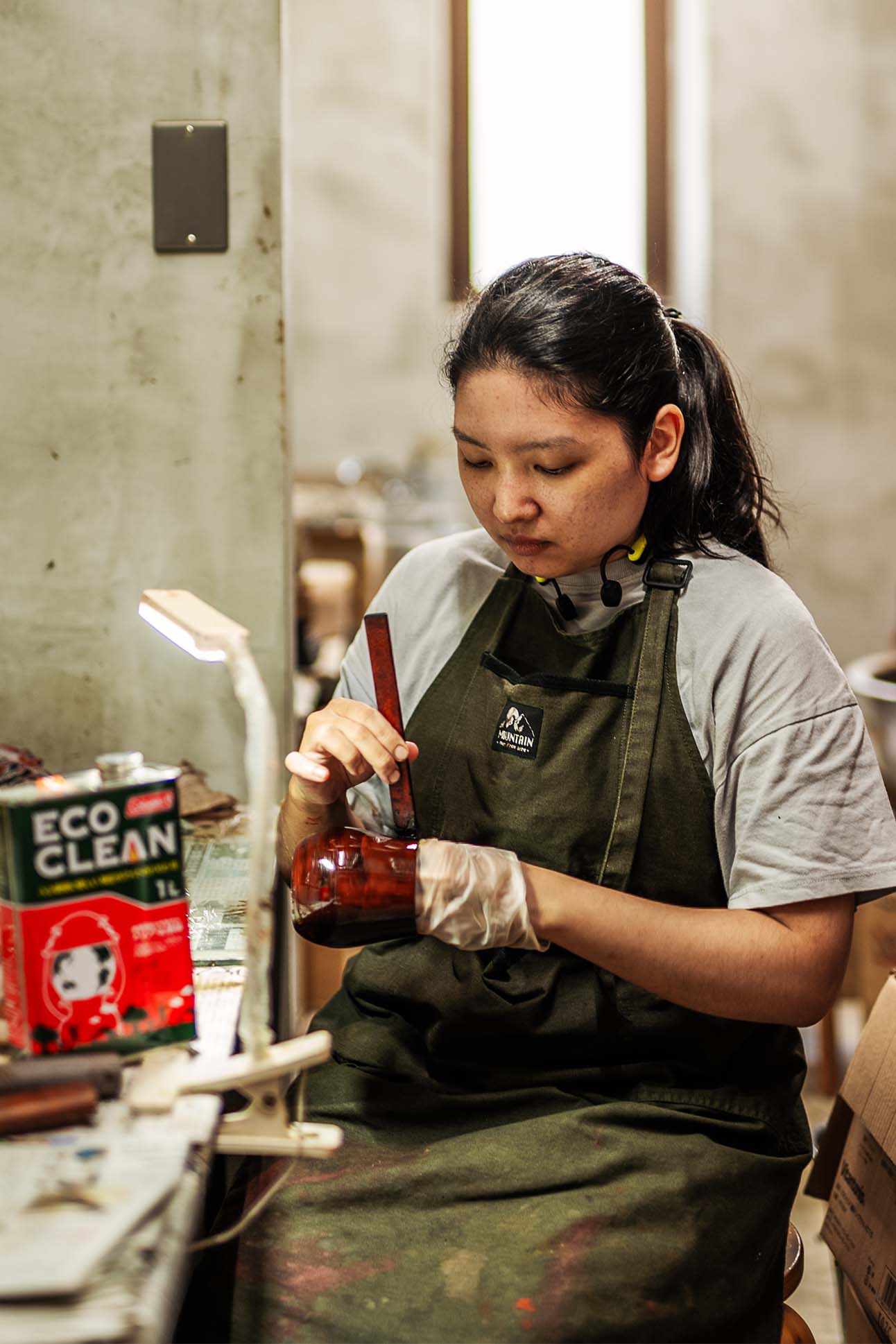
At the far end of the workshop, a cache of wood awaits transformation into Kakuman Shikki’s esteemed lacquerware. Logs of shitamagi, a dense Okinawan hardwood used to make bowls, cups, and other small items, stand upright against the wall. Stacked to the ceiling on metal shelves above them are thick cross-sections of deigo, the prefectural tree of Okinawa. This lightweight wood, prized for its stability and resistance to warping, is ideal for crafting large pieces of lacquerware like the one in Go’s hands. In the room next door, a young artisan is applying shitaji (base coating) to the bare wooden surface of a cup. From there, it will receive seven to nine layers of lacquer before it is decorated and polished to a lustrous sheen. “The more layers it has, the sturdier it becomes,” Go says, adding that areas most prone to wear are also reinforced with fabric and paper. With equal care devoted to form and function, these are objects meant to be used, not just admired.
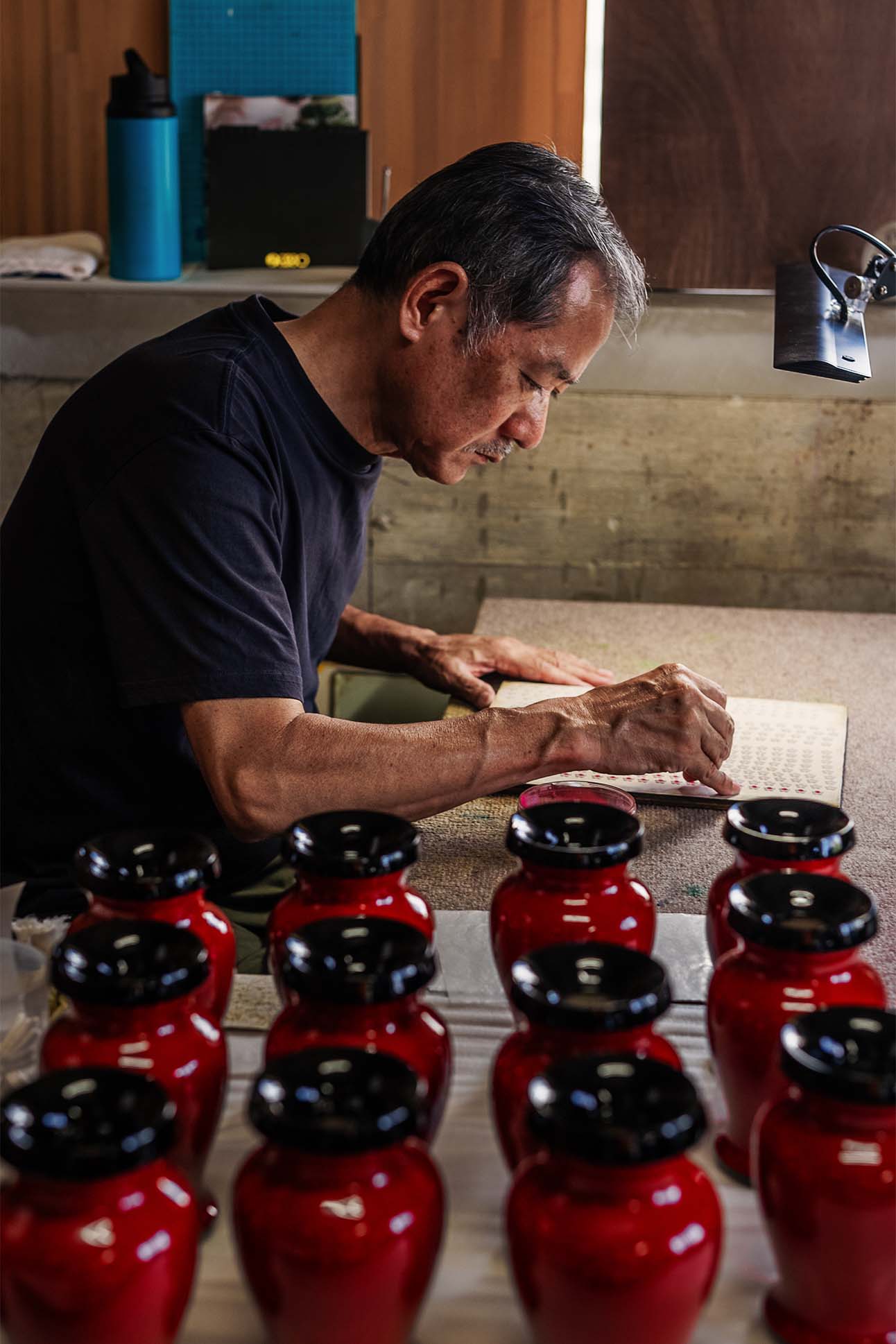
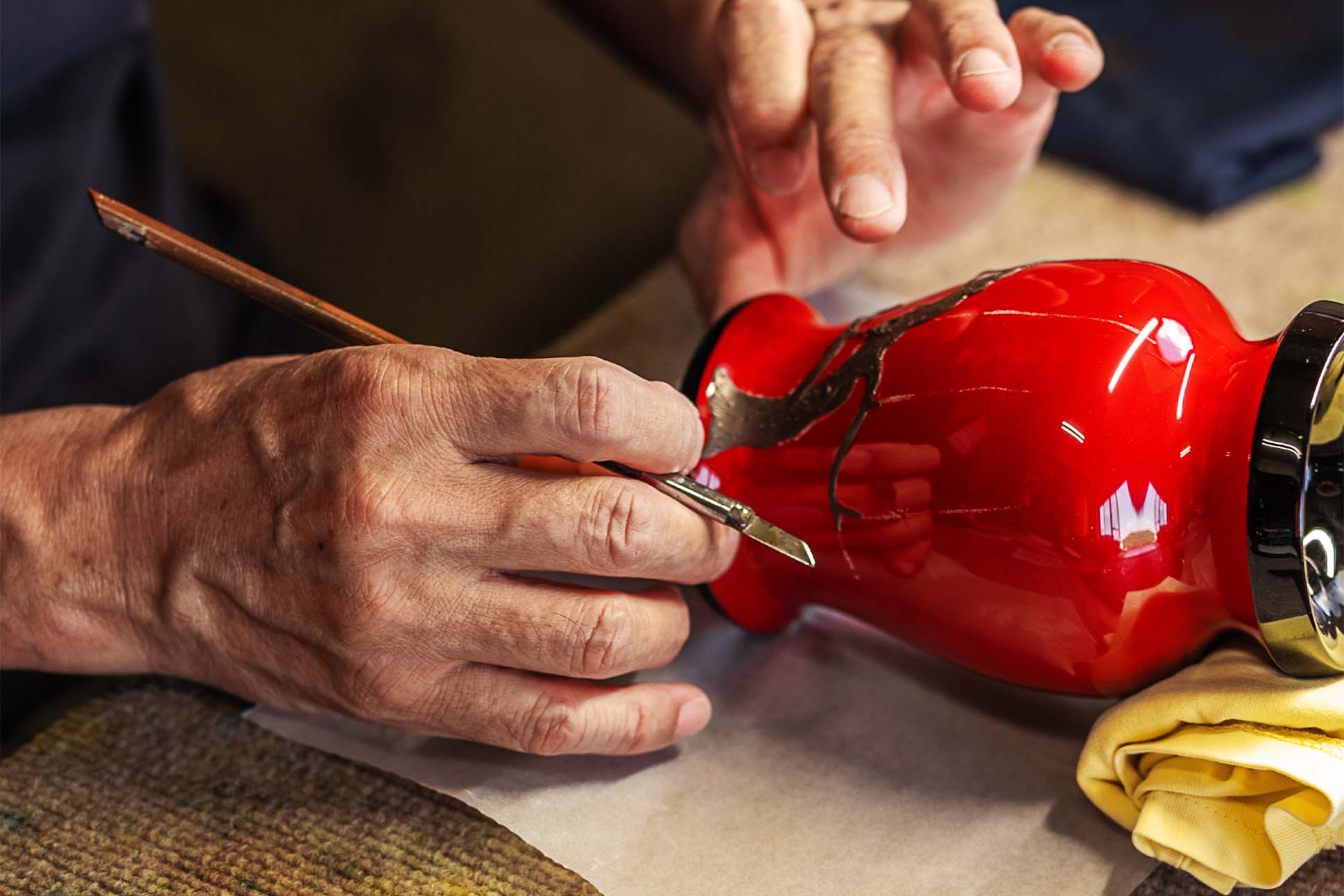
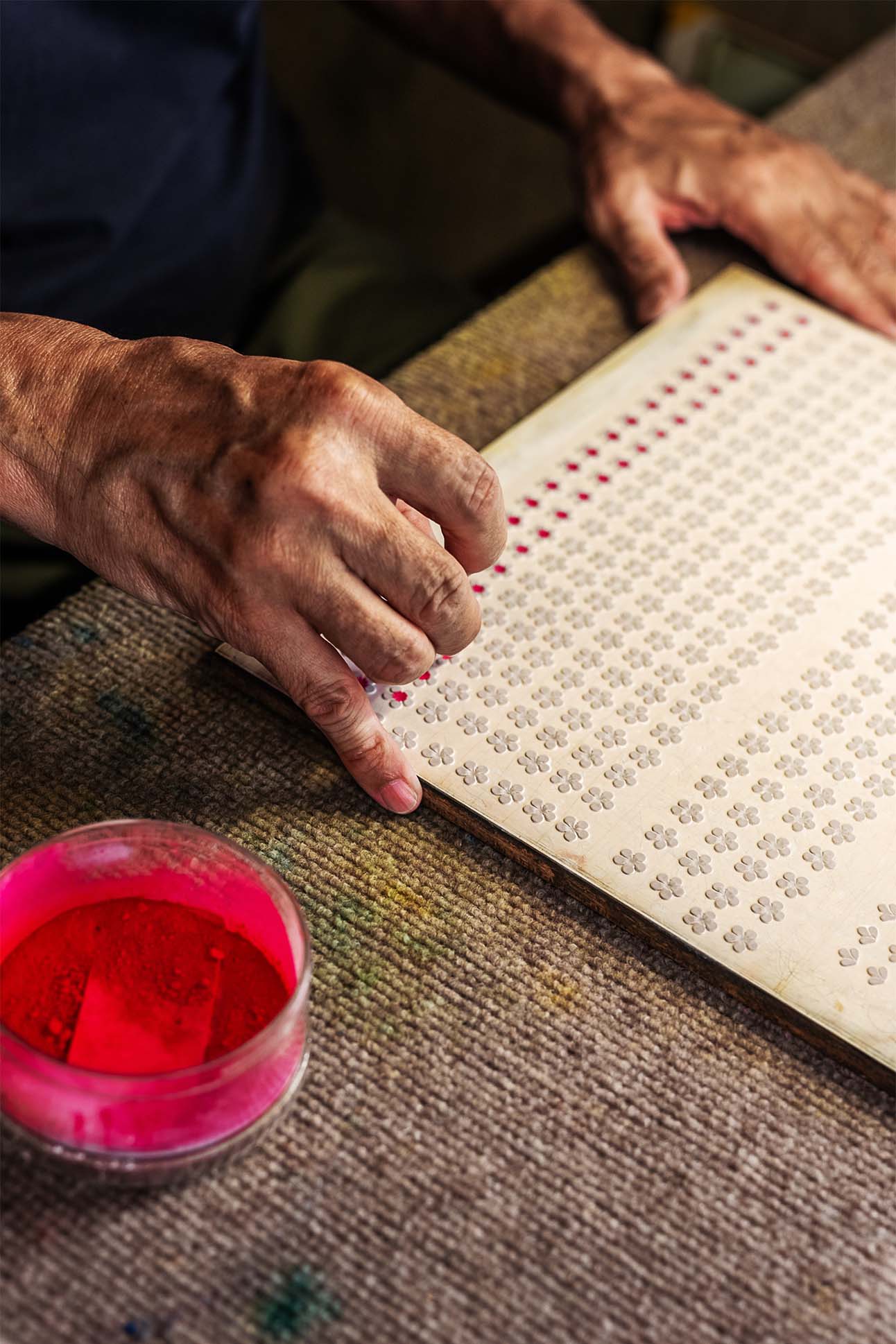
Nearby, a senior craftsman is hunched over a wooden board lined with hundreds of tiny plum blossoms delicately formed from lacquer. Using a cotton swab, he carefully dots pink pigment onto the center of each flower. Later, he’ll apply them to the vases beside him to create a raised, brocade-like effect on their surface, a distinctive feature of Ryūkyūan lacquerware.
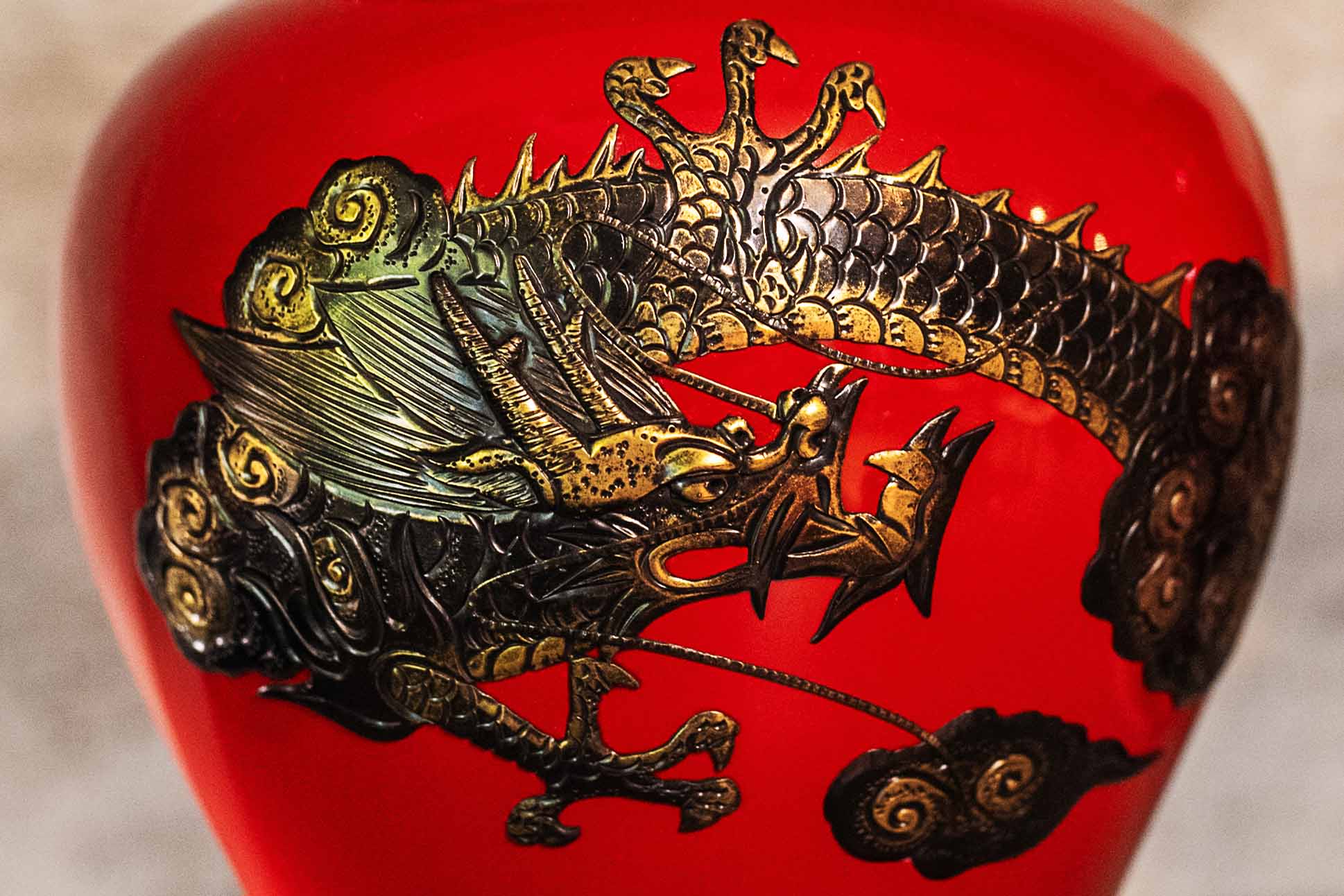
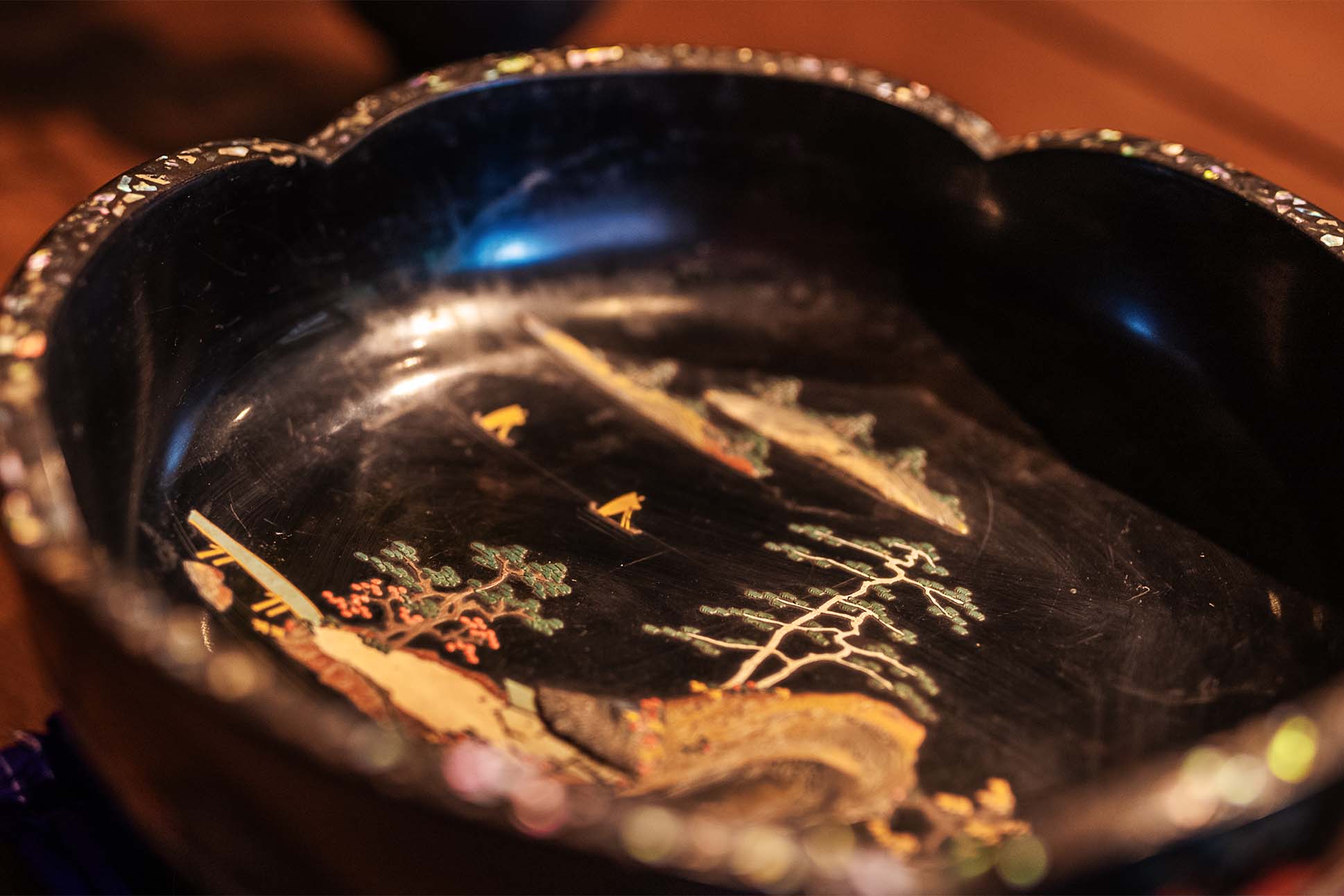
These decorative patterns carry symbolic meaning, Go explains: Curlicues represent longevity and abundance; lush fruit and flowers signify fertility and many offspring; a traditional motif known as “sansui”—an idyllic landscape of mountains and water—reflects the craft’s influences from East Asian art and philosophy.
Though Go is now a wellspring of knowledge on Ryūkyūan lacquerware, he admits he wasn’t always interested in the family trade. It was the 2008 financial crisis that prompted him to leave his job in audio equipment manufacturing in Tokyo and return to Okinawa to learn the business. He completed a lacquerware training program at the Okinawa Craft Industry Promotion Center, located in Haebaru at the time. His wife, Yukari, pursued the same training after they were married.
I want to make sure that any changes we make are done the right way.
Go Kadena, Kakuman Shikki
“When I first encountered the world of Ryūkyūan lacquerware, I was shocked by how little it was known,” Yukari says. “I also realized that both the number of people making it and the number of people using it were declining—it felt like a craft in crisis. It made me feel all the more strongly that it has to be carried on.”
“When I first encountered the world of Ryūkyūan lacquerware, I was shocked by how little it was known,” Yukari says. “I also realized that both the number of people making it and the number of people using it were declining—it felt like a craft in crisis. It made me feel all the more strongly that it has to be carried on.” Yukari now plays an integral role at Kakuman Shikki alongside Go, who took over from his father five years ago. Together, the couple work side by side to carry the company into its next chapter, ensuring not only the continuity of the craft but also its ongoing relevance.
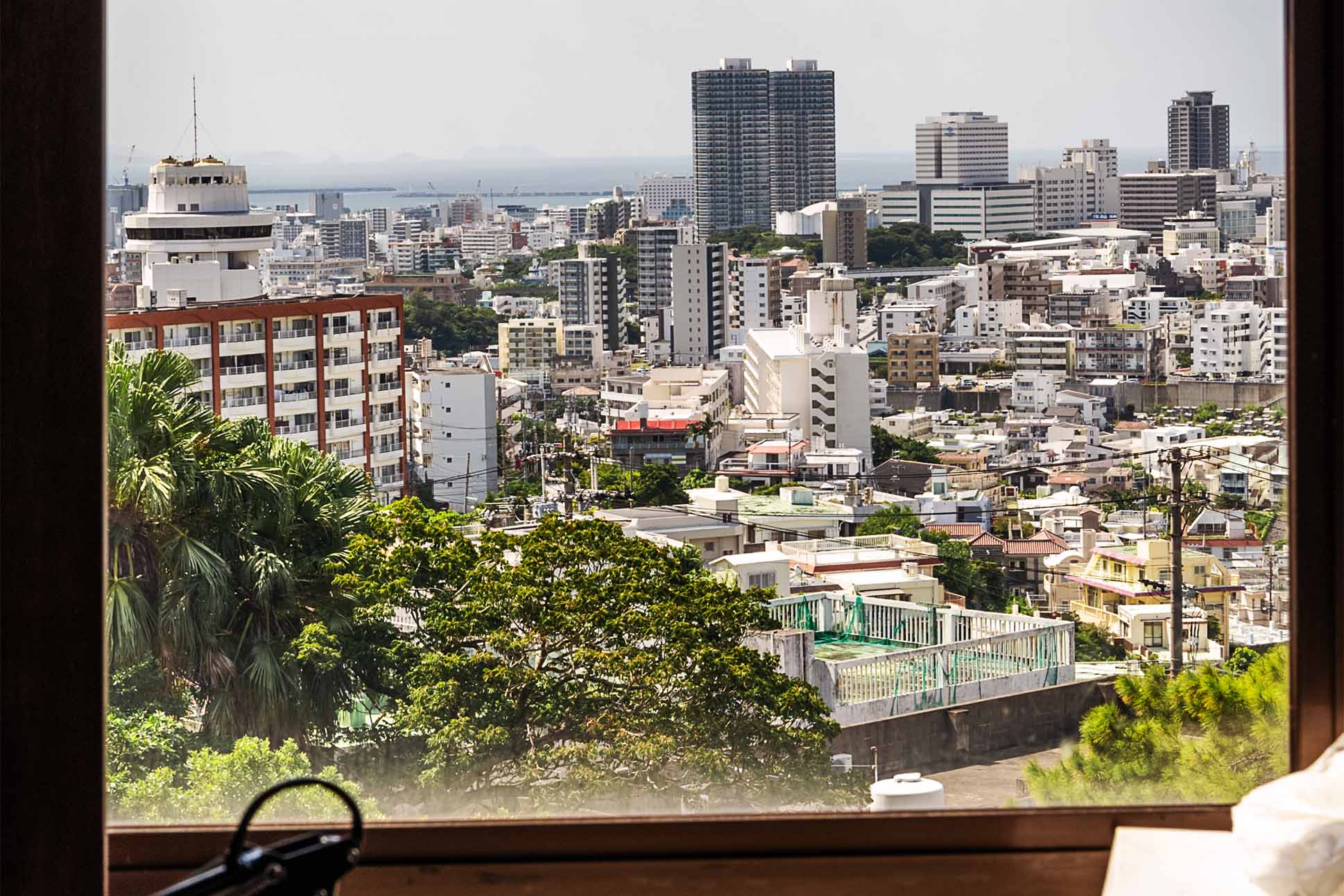
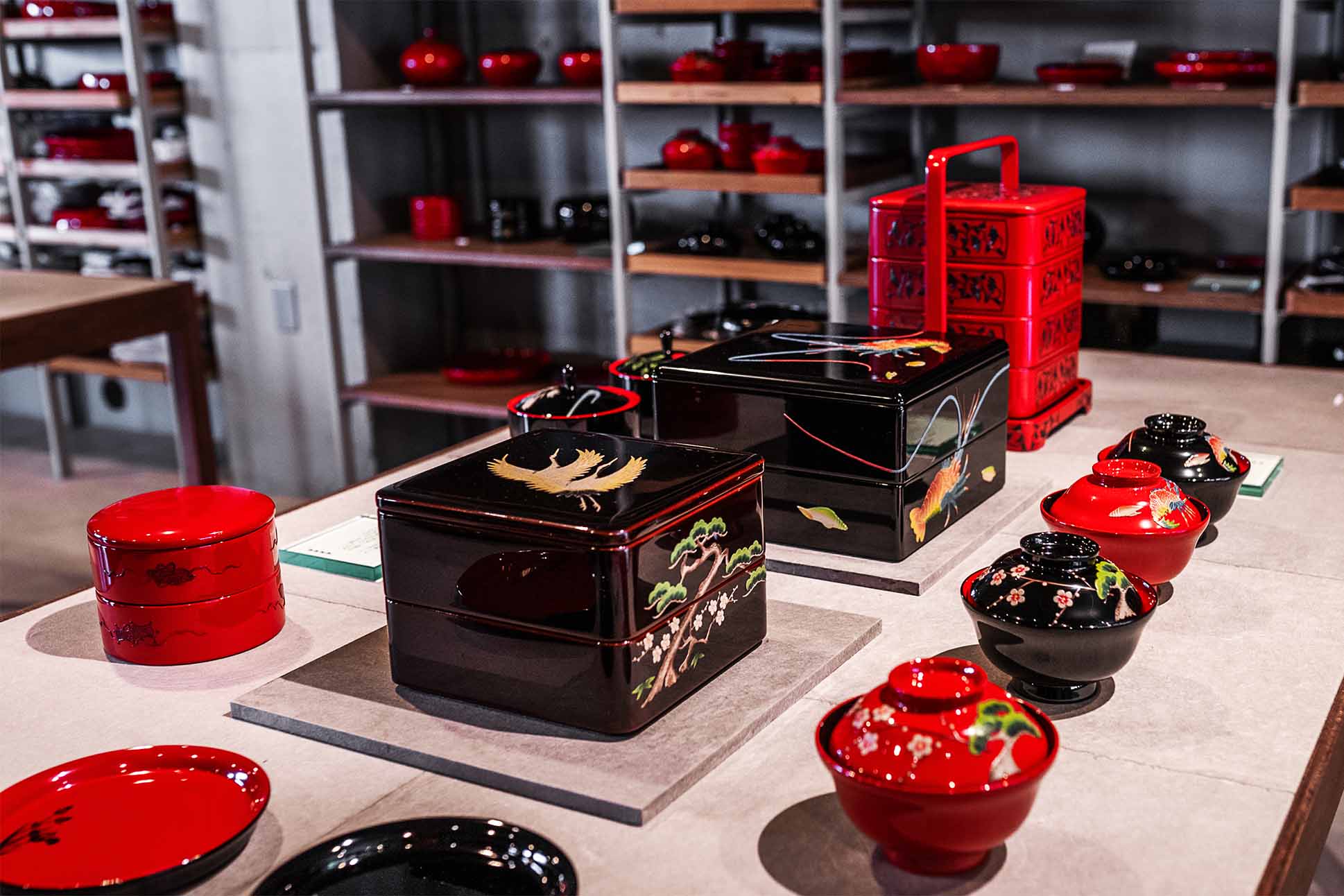
In the retail space beneath the Kakuman Shikki workshop in Naha, formal wares such as oju (tiered food boxes), obon (serving trays), futatsuki owan (lidded bowls), and kashiki (confectionery vessels) are increasingly joined by more casual items like chopsticks and hand mirrors. “Traditionally, Ryūkyūan lacquerware was made primarily for gifts and ceremonial use,” Yukari says. “But going forward, we’re gradually shifting toward creating items people might buy for daily use.” She points out a display case of lacquer jewelry. “I think there’s a sense that [this craft] no longer quite fits the needs of modern life, so we started designing accessories with the idea that it might help more people discover and connect with Ryūkyūan lacquerware,” she says.
The company is also in the process of reevaluating its materials and production methods to keep its offerings accessible to customers. “With the cost of wood and lacquer constantly rising, it’s important to make sure everyday items don’t become too expensive,” Yukari says. “If they’re priced out of reach, it defeats the purpose.”
Still, Kakuman Shikki remains committed to tradition. “I want to make sure that any changes we make are done the right way,” Go says. “Ryūkyūan lacquerware is defined by its techniques, materials, and craftsmanship—I think the best approach is to preserve those core elements while making changes to everything else. We want to cherish those foundations as we move forward.”
